obligations of party poopers
2025
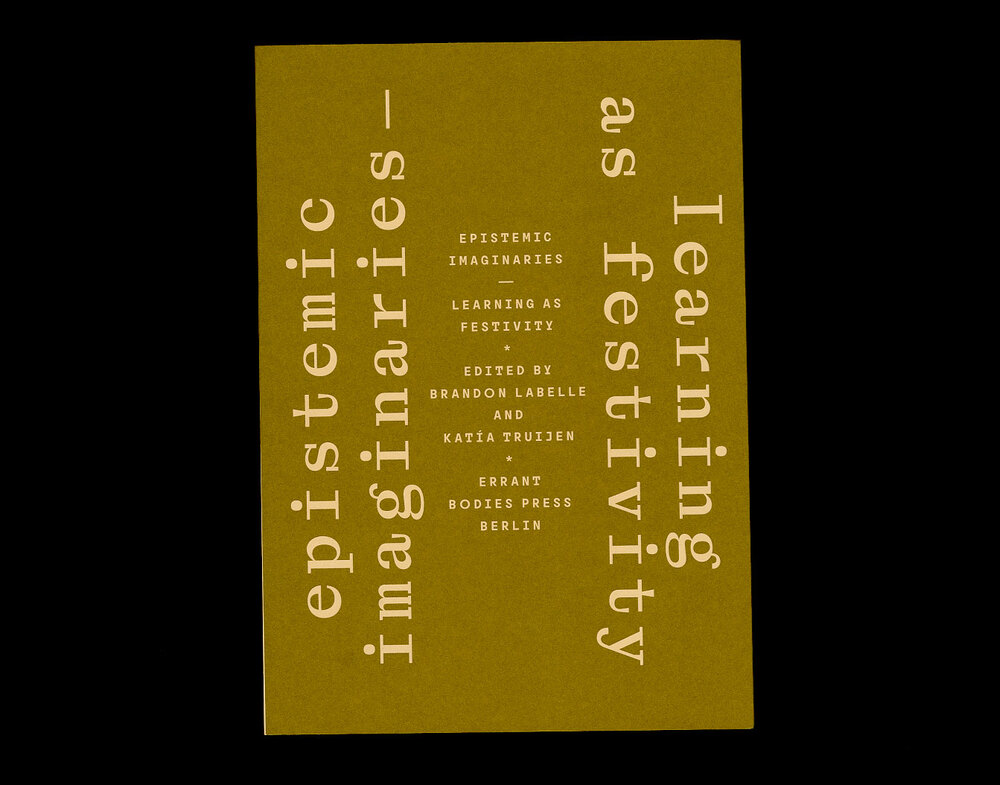
essay written for Epistemic Imagineries: Learning as Festivity
edited by Brandon LaBelle and Katía Truijen
published by Errant Bodies Press Berlin
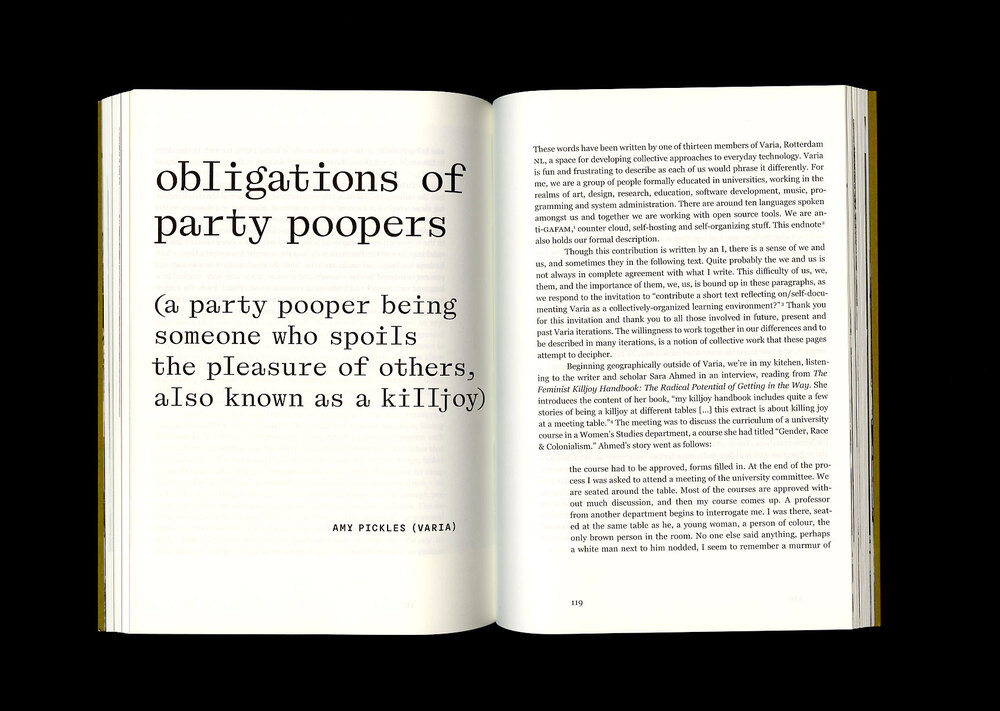
This essay describes how, in Varia, we can support one another to be killjoy - from Sara Ahmed's Feminist Killjoy, taken with a technological slant - and that being an inconvenient killjoy in a feminist mode means willing to be inconvenienced yourself, and willing to change. It reads collective work alongside Desideri and Harney's 'fate work', work that embraces fate and complicity – our dependencies and vulnerabilities when collaborating and using our own tools – this changes our otherwise usual fate, that is bound to capitalist production.
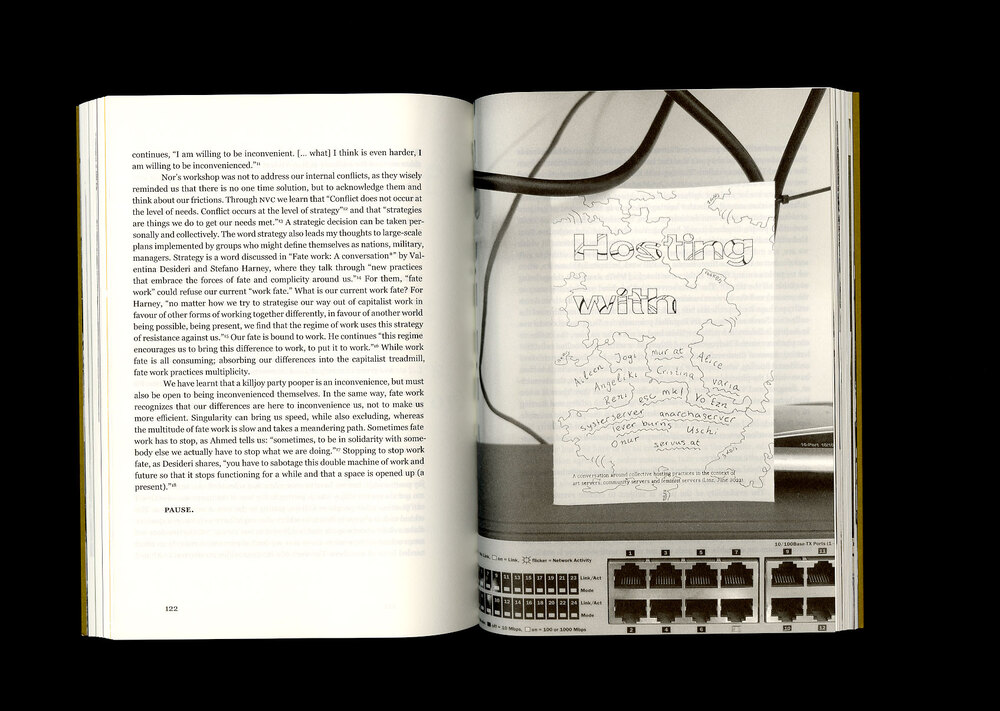
“[…] As a group of mostly shy and introverted people, conflict between Varia members has been difficult for us to discuss openly, and was a motivation for the workshop with Nor. Conversely, we are bound together by our conflictual positioning of mostly being killjoys (or party poopers) in different scenarios. You’re often a killjoy for not being on social media, for critiquing cryptocurrencies, requesting alt-text for images, refusing adobe, discussing the discriminatory bias of chat gpt, not trusting siri, reading through a Code of Conduct, asking that photographs of you are removed from public circulation and reminding people that the internet is primarily a techno-colonial-capitalist tool made from militaristic motivations. As a collective we can support one another in our killjoy positionings, but we have to remember that roles shift. As Ahmed says; “I am not always the killjoy who is getting in the way of the happiness of others, I can position other people as killjoys, getting in the way of my happiness. The ethical task is always to listen, to others who might have a claim on a space or make a claim about a space that is different to one's own” [Ahmed 2023]. Collective does not mean cohesive, the work to make sure we don’t slip into uniformity is an effort needed from all members. The work of a feminist killjoy is reflexive, as Ahmed continues; "I am willing to be inconvenient. [...what] I think is even harder, I am willing to be inconvenienced” [Ahmed 2023]. […] ”